

Table of contents
- Definition
- Benefits
- Beginner’s Guide
- Intermediate Exercises
- Advanced Exercises
- Workout Duration
- Frequency of Cardio Duration
- Check your intensity
- Conclusion
Definition
Cardio workouts or cardiovascular exercise is low and high intense activity that depends on the aerobic energy-generating process to elevate your heart rate. Though some use it solely for weight loss, cardio has many other benefits. Cardio workouts should be used in combination with strength training exercises for overall wellness. And while there are many cardio exercises to choose from, consistency, duration, and intensity are the most critical factors for meeting your fitness goals.
What Is Cardio?
Cardio exercise, which is sometimes referred to as aerobic exercise, is any rhythmic activity that raises your heart rate into your target heart rate zone – such as boxing drills on a punching bag. This is the zone where you burn the most fat and calories. Part of what sets cardio apart from other types of exercise—such as strength training – is that it relies on your body’s ability to use oxygen during the workout session. A person’s cardio ability or capacity can vary based on a number of factors such as
1. Age
- Natural Decline: Cardiovascular capacity tends to decrease with age due to changes in heart and lung function
2. Genetics
- Inherited Traits: Genetic factors can influence the efficiency of your heart, lungs, and muscles, affecting your overall cardiovascular capacity
3. Gender
- Physiological Differences: Men and women may have different cardiovascular capacities due to variations in heart size, lung capacity, and muscle mass
4. Physical Activity Level
- Exercise Routine: Regular aerobic exercise like running, swimming, or cycling can significantly improve cardiovascular endurance
- Sedentary Lifestyle: Lack of physical activity can lead to a decrease in cardiovascular fitness
5. Training Status
- Conditioning: Athletes or individuals who engage in regular, intense training typically have higher cardiovascular capacities
6. Health Conditions
- Chronic Diseases: Conditions like heart disease, diabetes, and respiratory illnesses can negatively impact cardiovascular capacity
- Medications: Certain medications can also affect heart rate and endurance
7. Body Composition
- Weight and Muscle Mass: Higher body fat percentages can reduce cardiovascular efficiency, while increased muscle mass can enhance it
8. Nutrition
- Diet: Proper nutrition, including adequate hydration and balanced meals, supports better cardiovascular performance
9. Environmental Factors
- Altitude: Higher altitudes can challenge cardiovascular capacity due to lower oxygen levels
- Temperature: Extreme temperatures can also affect cardiovascular performance
10. Psychological Factors
- Stress and Motivation: Mental health and motivation levels can influence your willingness and ability to engage in physical activity
By understanding and addressing these factors, individuals can work towards improving their cardiovascular endurance.
Benefits
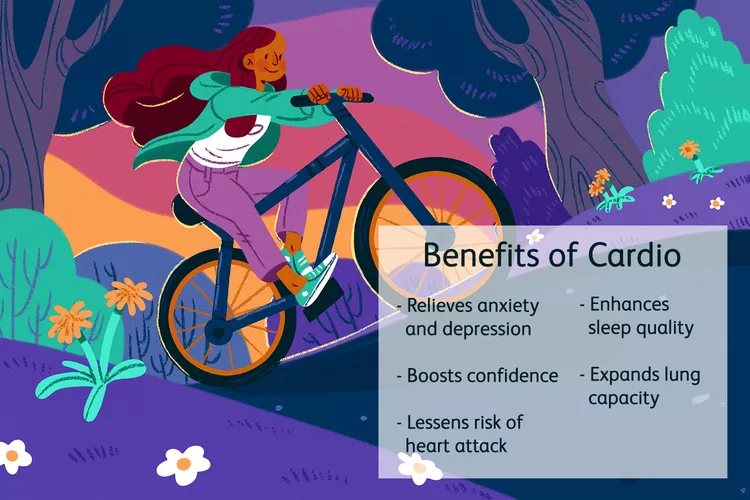
There are few activities you can do for a short period that have the physical and mental health benefits that cardio offers. Some of the known benefits of cardio include:
- Promotes fat and calorie burning, aiding in weight loss
- Improves sleep quality, particularly with moderate to vigorous physical activity
- Increases lung volume or the capacity of your lungs to hold air
- Enhances intimacy by boosting arousal, confidence, and addressing medication-related sexual challenges
- Enhances bone strength through weight-bearing activities such as hiking or stair climbing
- Reduces stress by enhancing your positive coping skills
- Boosts mood and alleviates depression and anxiety
- Boosts self-assurance in your appearance and well-being
- Lowers the likelihood of heart attacks, high cholesterol, hypertension, diabetes, and certain cancers
- Acts as an inspiring example, encouraging others to participate in physical activity
- Enhances heart efficiency, reducing the effort needed to circulate blood
Beginner’s Guide
For those new to cardio, consider starting with beginner workouts such as:
- Marching in place: Marching in place can elevate the heart rate, making this exercise a suitable choice for a warm-up or single cardio activity. To increase the intensity, a person can increase the speed they march or raise the knees higher.

- Single leg stand: This exercise works the abdominal muscles.

To perform:
Start with the feet together or no more than 3 inches (in) apart.
Bend the knees slightly and lift one leg 3–6 in off the floor.
Hold this position for 10–15 seconds and return the foot to the floor.
Repeat for the opposite leg.
To increase difficulty, a person can lift their leg higher off the floor or jump from one leg to the other more quickly.
- Dancing to music: To perform, bounce lightly from one foot to the other. At the same same, swing the arms from side to side.

A person can turn free space into a dancefloor at home.
Dancing to upbeat music can burn calories, while people may find it very enjoyable as an exercise.
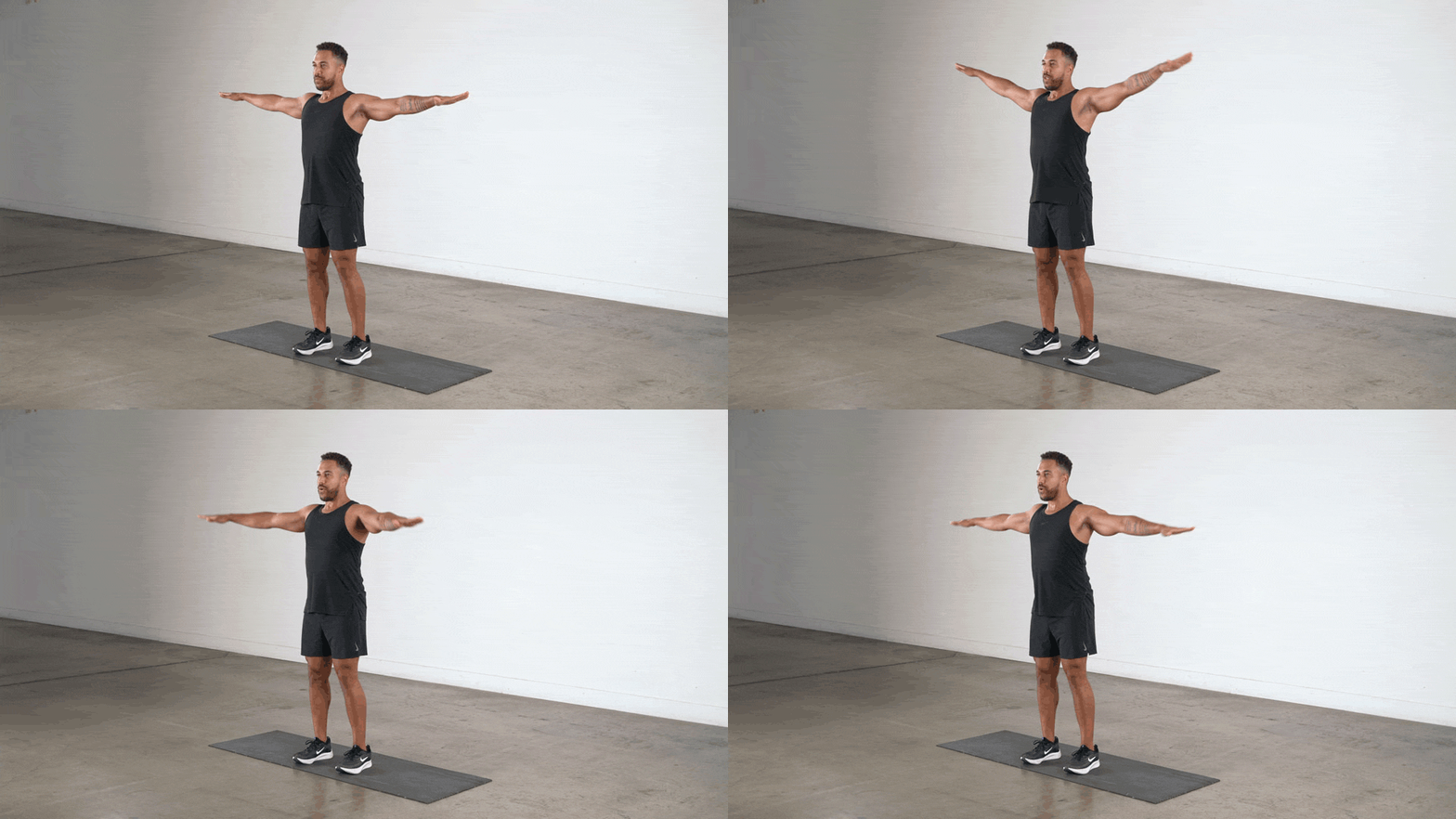
- Arm circles: A person can perform arm circles while sitting or standing, making them ideal for all skill levels.
To perform:
Rotate the arms in a circular motion, both clockwise and counterclockwise. The movement may resemble a butterfly or backstroke.
If a person has limited mobility in their arms, they can extend their arms to their sides and draw small circles.
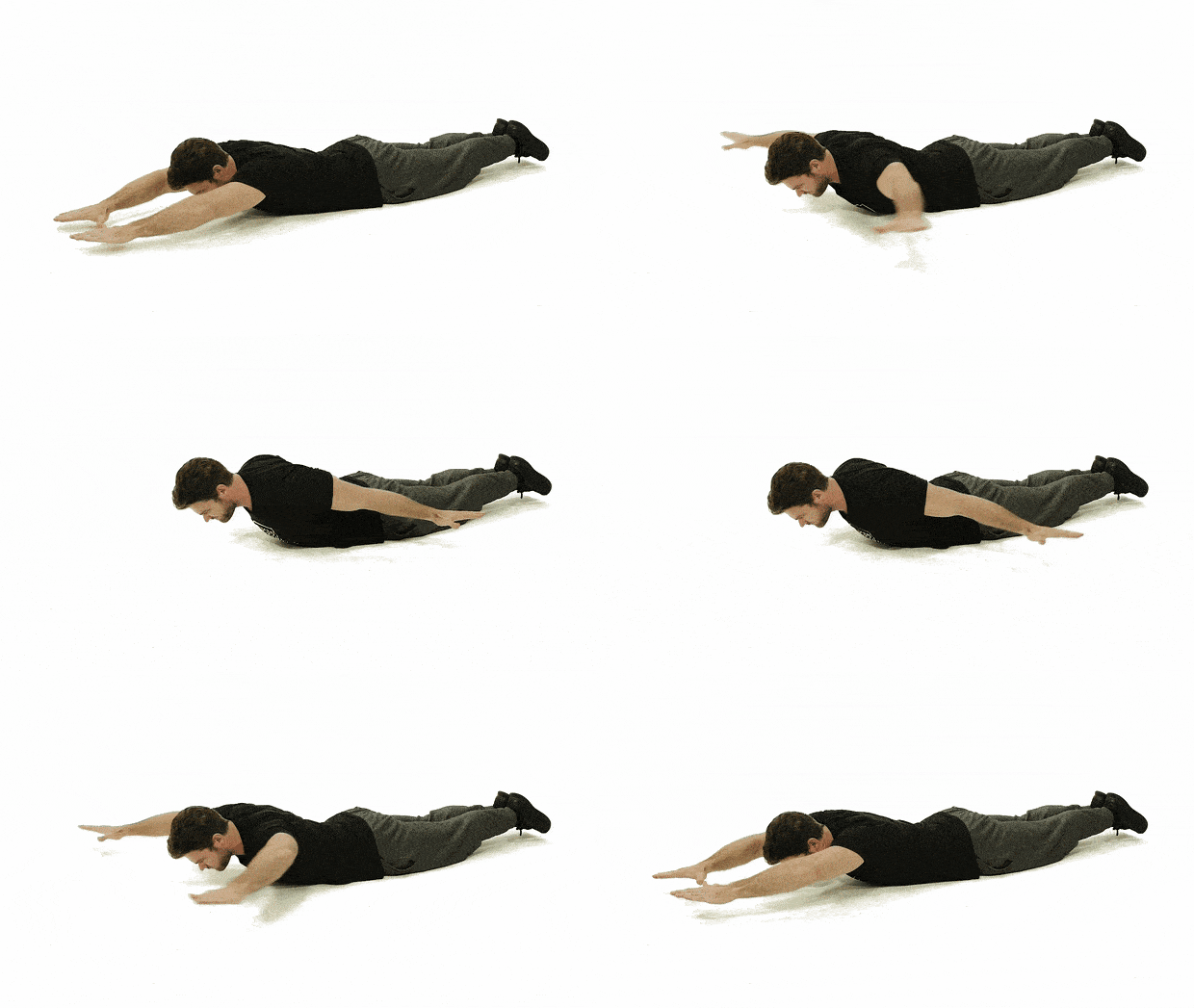
- Lying snow angel exercise
This exercise should be done lying down, targeting the abs, chest, and shoulders.
To perform:
Lie on your back with your feet flat on the floor.
Slightly tuck your pelvis to press your lower back against the ground.
Extend your arms from your shoulders, bending your hands slightly towards your ears.
Slowly lift your hands towards your head until they meet.
Return your hands to the starting position and repeat.
- Trunk rotation
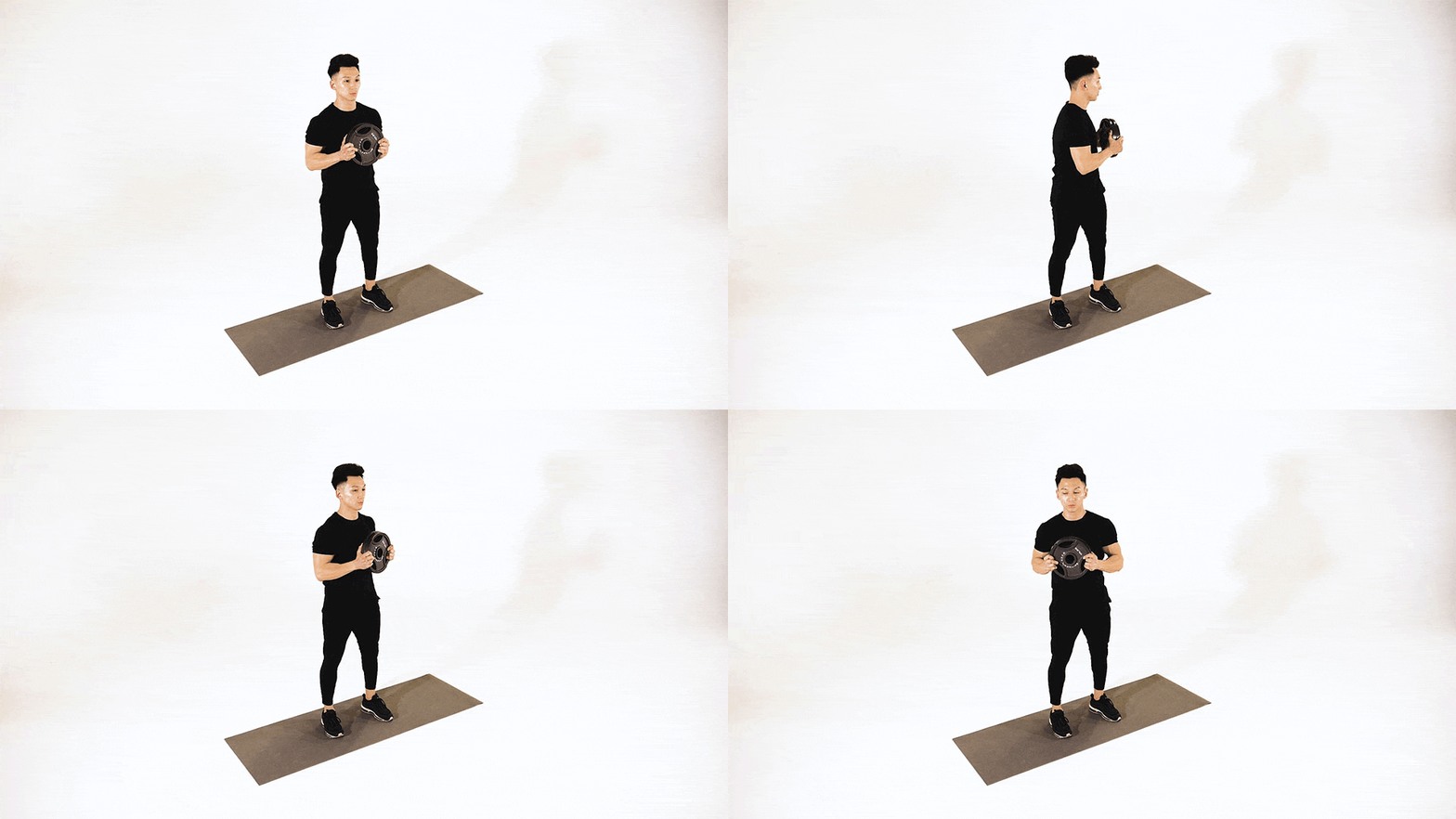
The trunk rotation works the abdominal muscles while testing the cardiovascular system. To increase the intensity, a person can hold a heavy weight, such as a kettlebell, exercise ball, or other household items.
To perform:
Stand with a heavy object at chest height with elbows to the sides.
Twist from the torso, turning to one side, then the other.
A person can also hold the arms at shoulder height and twist side to side.
- Air squats
Air squats work the thigh muscles, hamstrings, quadriceps, and glutes. Since good balance is required, they are an excellent way to engage the core muscles as well.

To perform:
Keep feet at shoulder width apart and pointed straight ahead.
When squatting, the hips will move down and back.
The lumbar curve should be maintained, and heels should stay flat on the floor the entire time.
In air squats, the hips will descend lower than the knees.
Intermediate Exercises
Intermediate workouts elevate the intensity to boost heart rate and enhance physical activity.
- Jogging in place

Jogging in place is a simple and effective exercise to increase heart rate. This is also a suitable beginner warm-up activity.
- Air jump rope
The air jump rope requires a person to “swing” an imaginary jump rope in the air. The exercise provides an alternative to jogging in place and is suitable as part of a warm-up routine.

To perform:
Stand with the feet together and jump up and down while swinging the arms in a circular direction.
- Jumping jacks
Jumping jacks are a beginner cardiovascular exercise that a person can perform almost anywhere.

To perform:
Begin with the feet hip-width apart and arms down.
Raise the arms out to the sides, straight in the air while jumping out with the feet apart.
Jump back into the starting position and land softly on the balls of the feet, bringing the arms back into the body.
A person can increase the exercise intensity by jumping higher or faster. They can also reduce intensity by performing slower or smaller jumping jacks.
- Squat to front kick
This exercise will challenge a person’s balance by adding a single leg kick at the peak of the squat position.
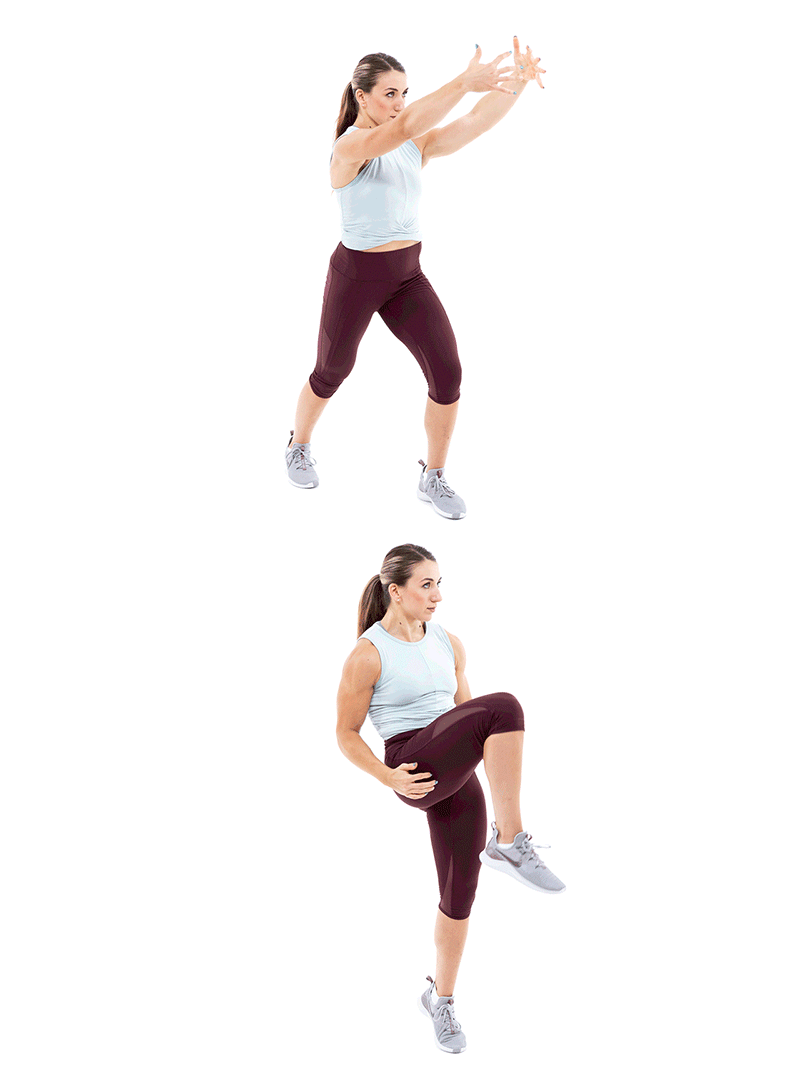
To perform:
Stand with the feet hip-width apart and arms at the sides.
Bend at the knees to squat down.
Return to standing and extend one leg to perform a front kick.
Repeat the kick on the other side.
- Stair climb
A person can incorporate stairs into a workout by going up and down them several times.

To perform:
Taking the stairs two at a time and increasing speed to a running pace can further challenge the cardiovascular system and leg muscles.
- Lateral shuffles
This shuffling motion closely resembles a football or speed-skating warm-up.
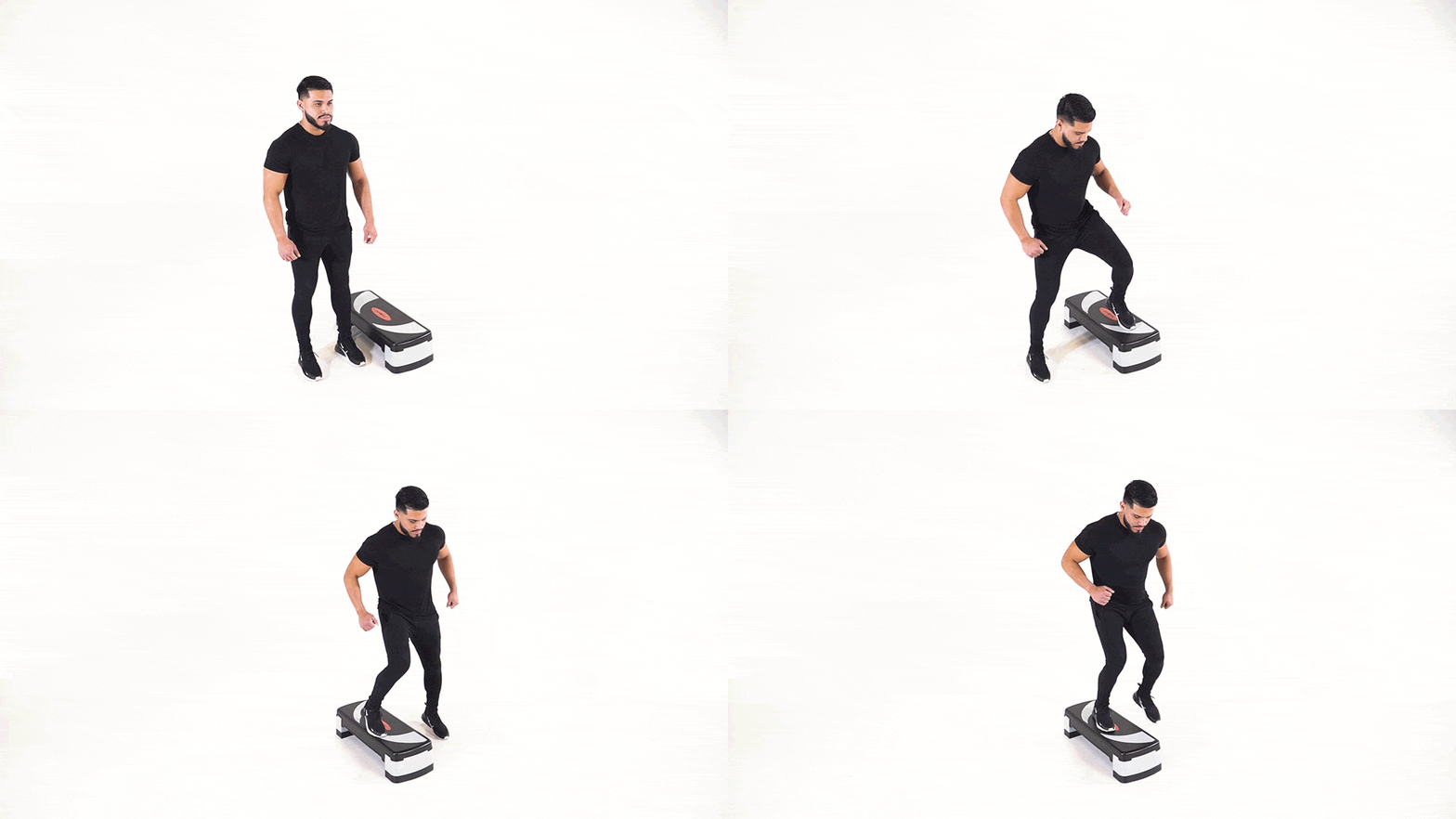
To perform:
Start on one end of a room and squat slightly.
Shuffle toward the other side of the room, with the feet meeting together before shuffling out and forward again.
Pick up speed and increase the squat depth to increase the exercise intensity.
Advanced exercises
A person can increase the intensity — referring to the rate and repetitions — of any cardio exercise to convert them into advanced movements.
However, some exercises are also more complicated and involve transitions from floor to standing.
- Jump rope

Increase the difficulty of jumping an air rope in the beginner exercises to jumping with a real rope at home.
A person can alternate between jumping with both feet and jumping from one foot to the other.
- Squat jumps
Squat jumps are a way to increase the exercise intensity while working the glutes, quadriceps, hamstrings, and calves.
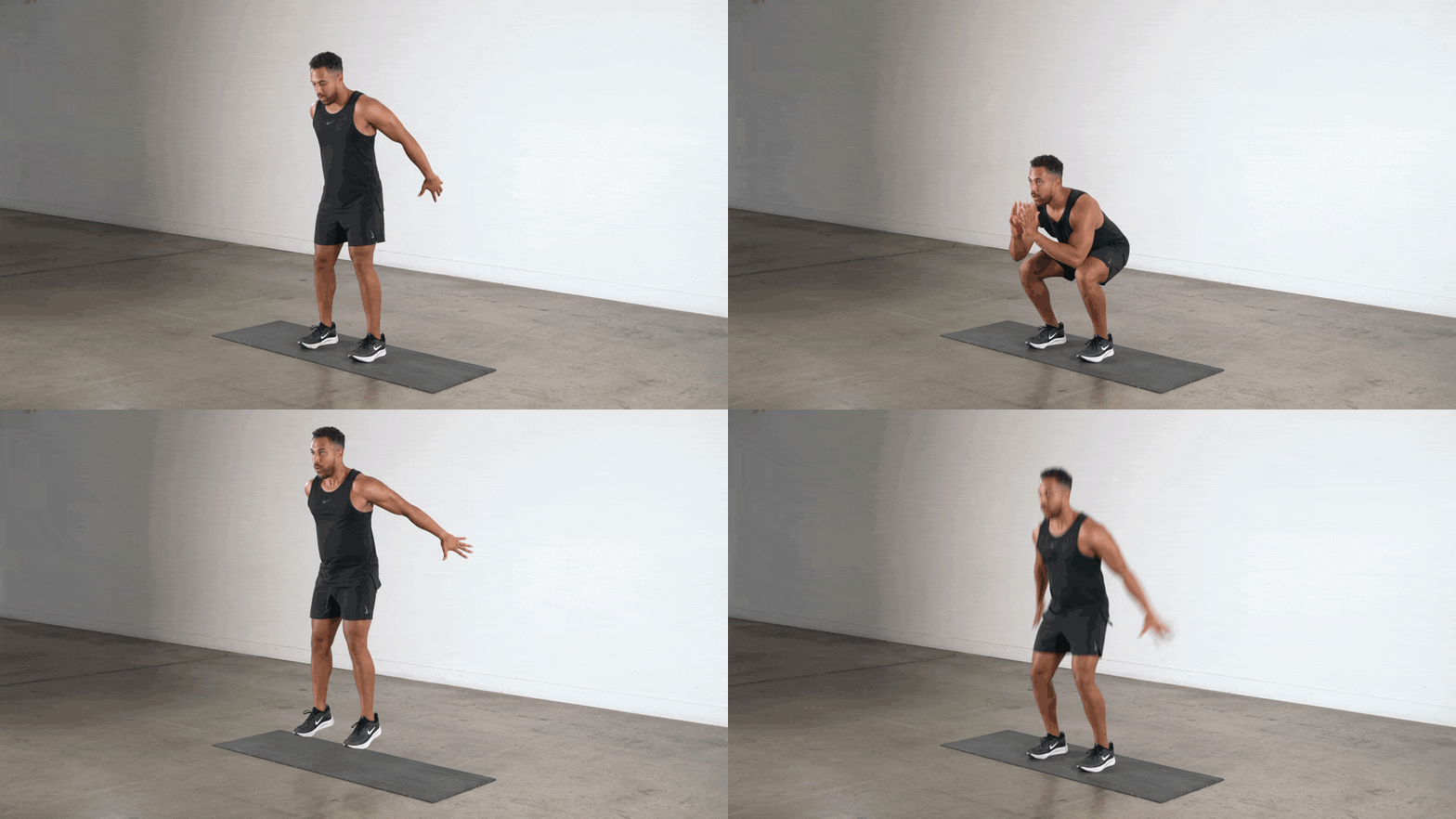
To perform:
Stand with the feet hip-width apart and arms at the sides.
Bend at the knees to squat.
From the squat position, jump in the air and extend the hips until the body is straight.
Land softly on the balls of the feet, rolling backward to absorb the shock in the heels.
Repeat using different arm movements to adjust the difficulty.
- “Screamer” lunges
Screamer lunges help build leg muscles while challenging the heart.
To perform:
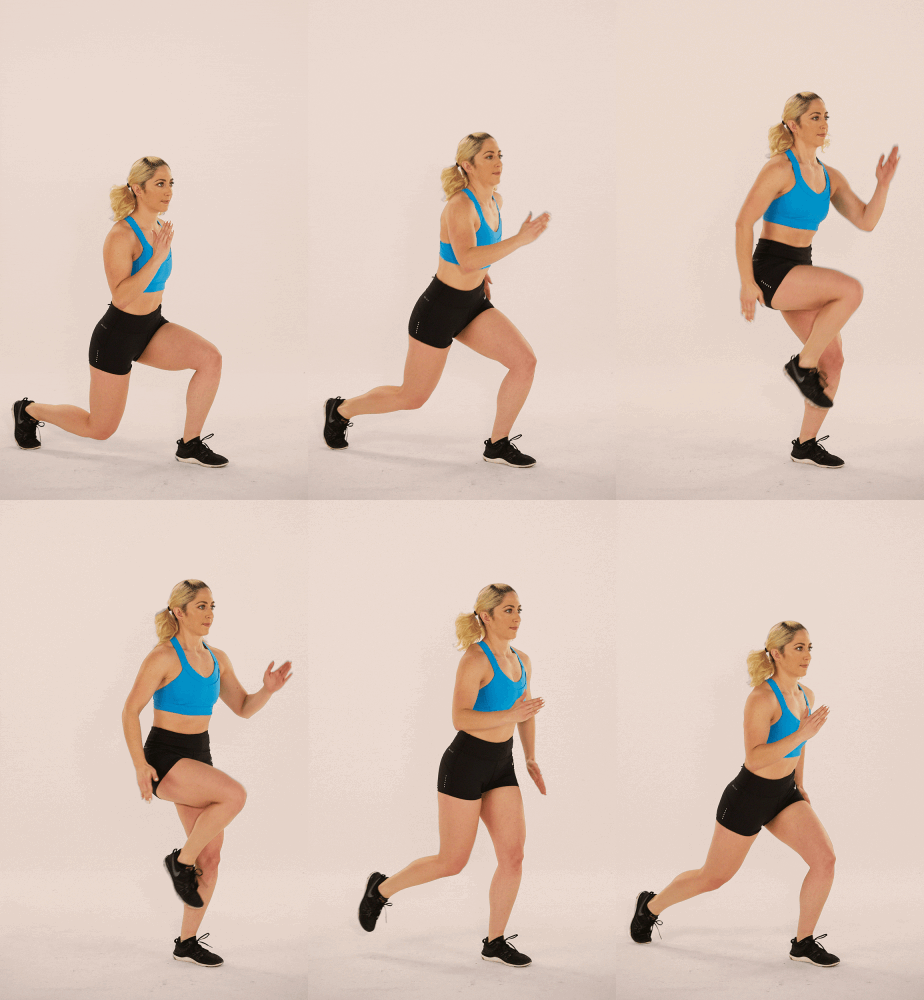
Stand with the feet hip-width apart.
Extend the right leg back to a lunge position.
Push off with the right foot to lift the right knee to hip height, jumping in the air while doing so.
Return the right foot to the starting position and repeat for 10 lunges on one side.
Repeat for the left leg.
- Mountain climbers
Mountain climbers are an advanced exercise to work the whole body, especially the lower portion.
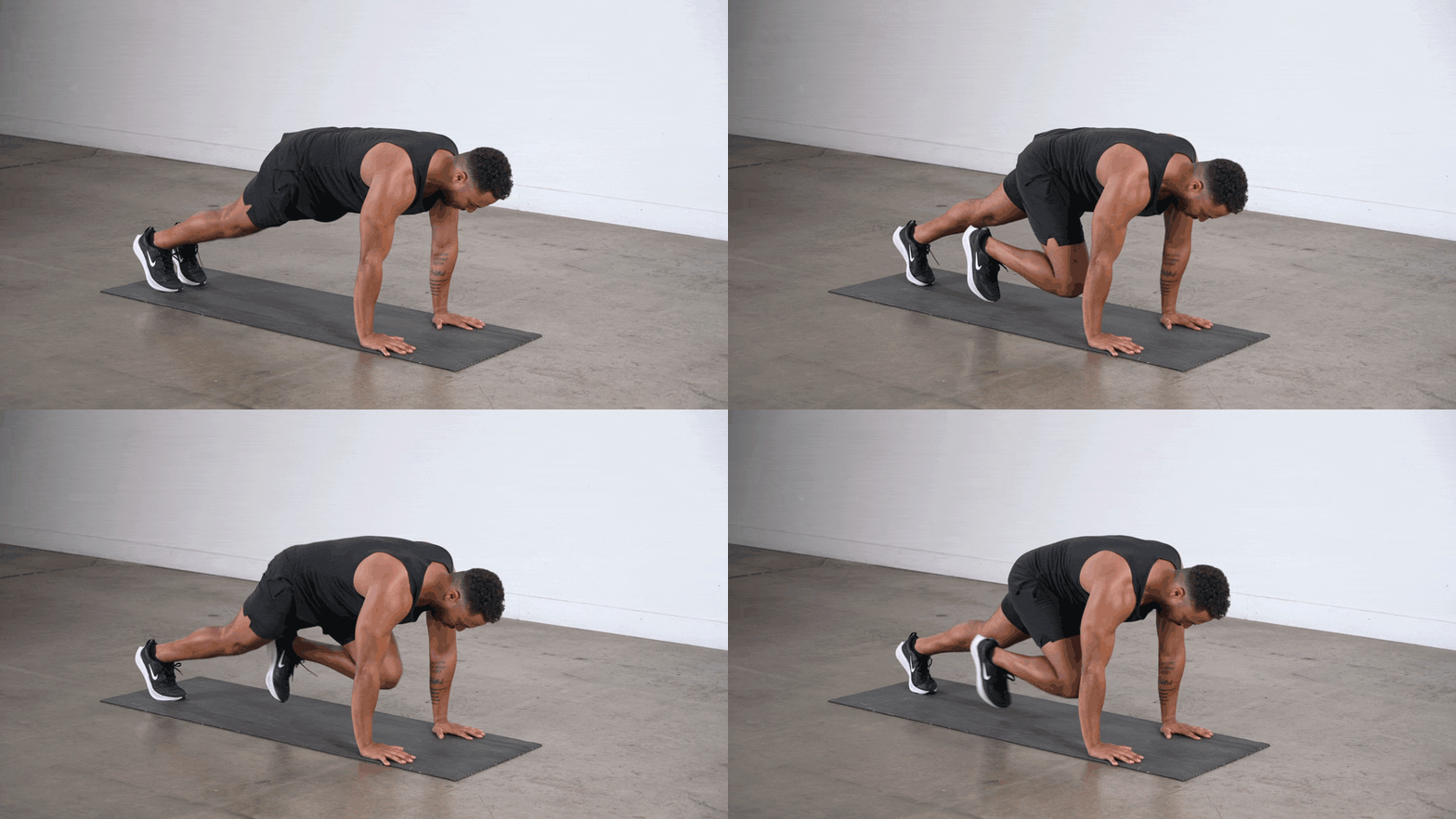
To perform:
Start in a pushup position with the right leg extended backward and the left leg near the chest with the toes on the ground.
Keeping the hands on the ground and hips level, quickly switch the positions of the legs.
Continue to alternate the legs.
- Burpees
Burpees are an advanced full-body move to get the heart pumping.
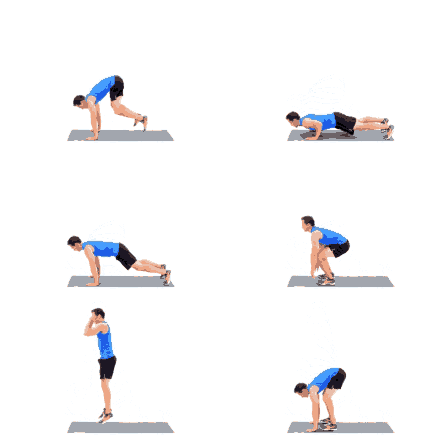
To perform:
Start with the body in a pushup position.
Push off the balls of the feet to bring the knees into the chest and land in a squat.
Jump out of the squat, raising the hands in the air before landing softly back into the squat.
Place the hands back on the floor underneath the shoulders.
Spring the legs back to return to the starting position.
If a person wishes to increase the difficulty further, they can use a special exercise device called a Bosu ball.
- Bear crawl
The bear crawl is a full-body exercise.
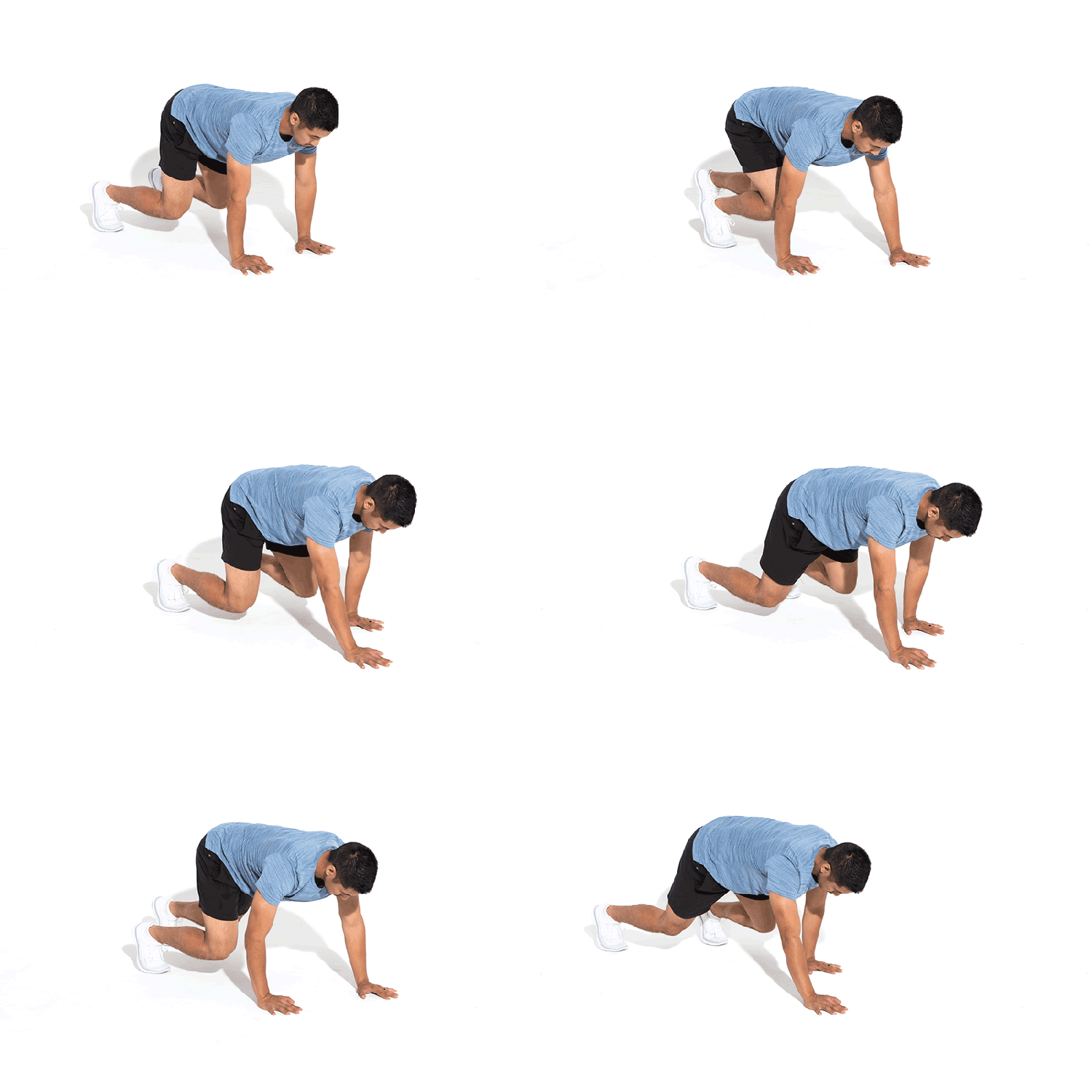
To perform:
Start in a pushup position.
While keeping the knees off the ground and bent, crawl forward by alternating leg and arm movements.
Keeping the torso level and abs supported.
- Inchworms
The inchworm is a full-body exercise that improves mobility and tests shoulder strength.
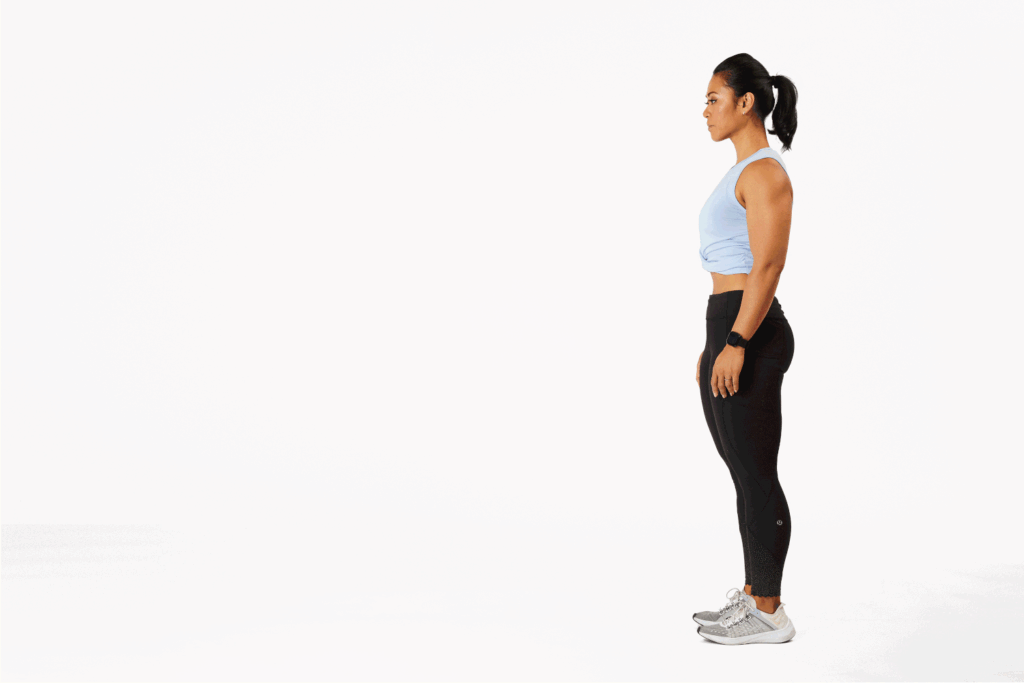
To perform:
Start in a standing position, reach down and touch the toes briefly before walking the hands out to a pushup position.
Perform a pushup, then walk the feet toward the hands and lift the hips upwards, similar to the downward dog position.
Inch the feet as close as possible toward the hands before walking the hands out to return to the pushup position.
Workout Duration

Health authorities recommend that most people get 150 minutes of cardio exercise per week. The beauty of cardio is that you don’t need to exercise for an hour to reap the benefits. Even short 10-minute sessions contribute to your weekly exercise goals. Determine your weekly target and divide it into manageable chunks.
Beginners might find it easier to start with 10- or 15-minute intervals. Gradually add 5 minutes as it becomes more comfortable, aiming for 30- to 60-minute sessions over time.
Frequency of Cardio Duration
If you’re new to exercise, aiming for better health, short on time, and not focused on weight loss, daily short workouts can be beneficial. However, if you’ve been consistently exercising for years, typically spend 60 minutes at the gym, and prioritize muscle building over fat burning, three to four cardio sessions per week should suffice.
When considering how often to exercise, it’s crucial to factor in intensity. Light or moderate cardio can typically be done daily, but high-intensity workouts require more rest days. Combining both types helps engage different energy systems and prevents burnout.
Check your intensity
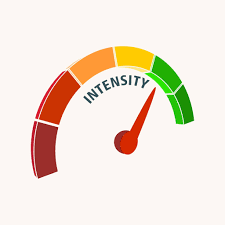
After getting accustomed to 30 minutes of continuous exercise, start focusing on intensity. The effort you put in is vital for your workout due to:
- Calorie burn: Higher intensity leads to more calories burned.
- Ease of monitoring: Tools like heart rate monitors or perceived exertion scales help track your workout intensity.
- Time efficiency: Increasing intensity allows you to burn more calories in less time
Variation: Swap your usual cardio workout with something new, whether cycling, a HIIT or dance class, rock climbing, or workouts on a trampoline or rebounder. Your body will love the new challenge.
How Hard Should You Work?
Vigorous Cardio: This falls between 70% and 85% of your maximum heart rate (MHR), or a 7 to 8 on the perceived exertion scale. Vigorous cardio is challenging and leaves you too breathless to talk much. If you’re a beginner, try beginner interval training to work harder for shorter periods.
Medium-Intensity Cardio: Medium-intensity cardio falls between 50% and 70% of your maximum heart rate (MHR), or a level 5 to 6 on the perceived exertion scale. The U.S. Department of Health and Human Services often recommends this level of intensity in its Physical Activity Guidelines. This is the level you typically want to shoot for during your workouts.
Light Cardio: This type of exercise is considered below 50% of your MHR, or about a level 3 to 4 on the perceived exertion scale. This is a good level to work at during warm-ups or when you’re squeezing in other activities, like walking, throughout the day.
Conclusion
Incorporating cardio workouts into your fitness routine can significantly enhance your overall health and well-being. Whether you prefer high-intensity sessions that push your limits, moderate-intensity workouts that keep you steadily active, or low-intensity exercises that fit seamlessly into your daily life, there’s a cardio option for everyone.
Remember, the key to success is consistency and finding the right balance that suits your fitness level and goals. Start with what feels comfortable and gradually increase the intensity as your endurance improves. Don’t forget to listen to your body and give yourself time to recover.
Ready to take the next step? Set your fitness goals, choose your favorite cardio activities, and get moving! Your heart will thank you.